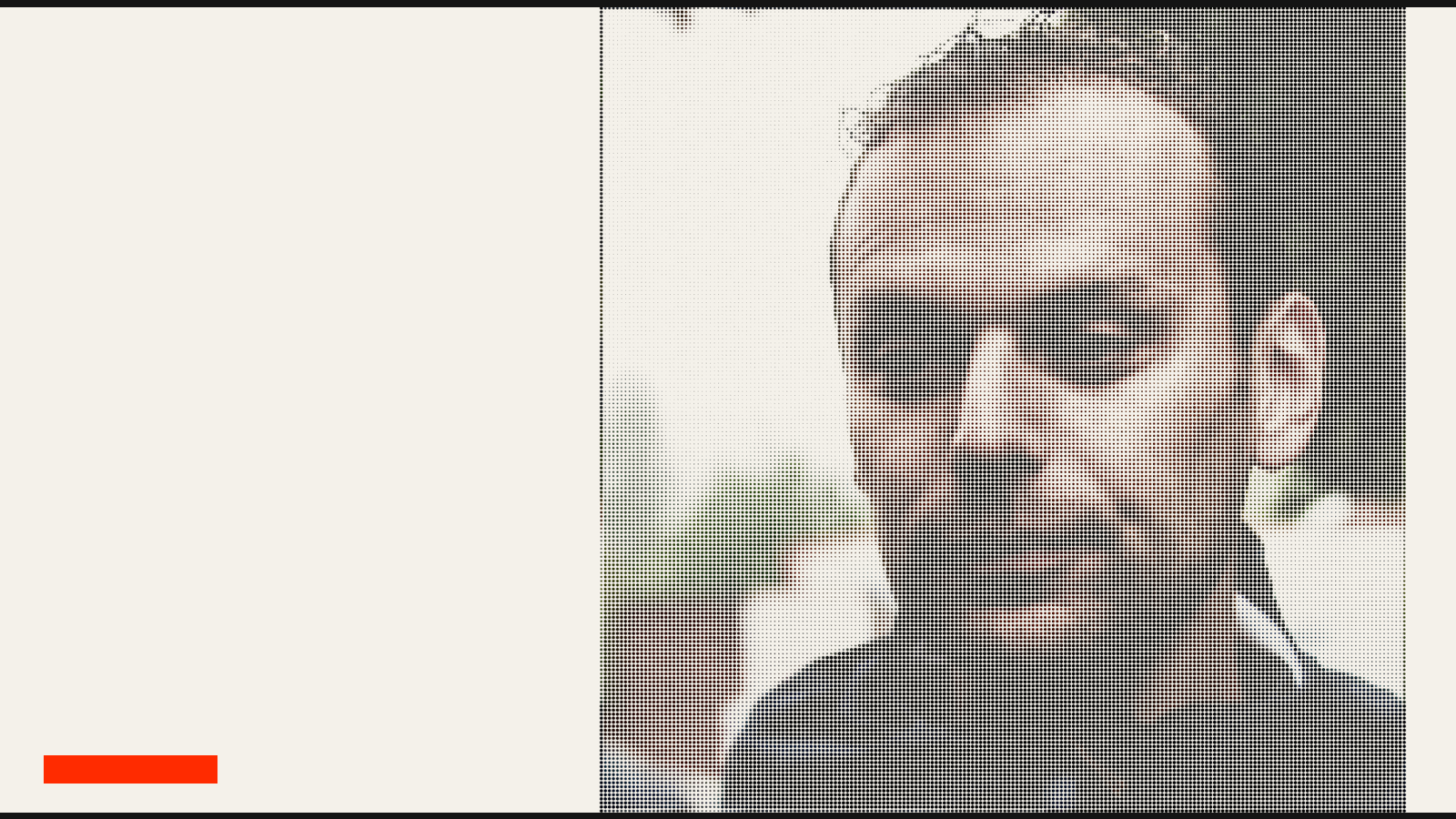
Josh Simons resigned his safe seat, waved Andy Burnham toward it, and collected a round of warm coverage about a selfless servant stepping aside. Almost none of it mentioned that he had left government this spring while under investigation, or that the think tank he fronted had been caught commissioning private inquiries into journalists. The gracious send-off is the laundering in miniature — a record scrubbed in real time, helped along by a press that prefers access to memory. This is what is being washed away.
The man who arrived
Simons did not come from nowhere, and he did not come from the right. He worked as a policy adviser to Jeremy Corbyn before breaking with the party in 2016, leaving via a stinging Guardian piece that accused the far left of antisemitism. An artificial-intelligence specialist by trade, he resurfaced in October 2022 as a director of Labour Together — and became, in his own description, the vocal advocate for its electoral strategy. The convert is often the most useful operative: he knows the ground he turned on.
The machine he fronted
Labour Together was not the genteel think tank it presented as. In *The Fraud*, Gabriel Pogrund and Patrick Maguire document how Morgan McSweeney took control of it as company secretary and ran covert projects through it — founders such as Jon Cruddas kept in the dark. Out of the same orbit came the front groups: McSweeney co-created the Centre for Countering Digital Hate, while Stop Funding Fake News set about demonetising and smearing left-wing outlets like The Canary. And it ran on money the public was never told about — hundreds of thousands in donations that went unreported to the Electoral Commission. This was the operation Simons was hired to give a respectable face.
“Labour Together under McSweeney was a modern-day version of the Militant Tendency — a party within a party, masquerading as something it was not, lying to people about its purpose.” — Neal Lawson
And Simons gave it one, willingly. He became the organisation's assertive public face, defending the rightward turn and rebranding the outfit, by 2024, as 'Keir Starmer's provisional wing'. He was not a naïf who wandered into a covert operation; he told the Financial Times, on the record, exactly how tightly it was wired into the leadership.
“Everything we do is coordinated closely with Morgan McSweeney and Sue Gray and Deborah Mattinson.” — Josh Simons, Financial Times, May 2024
He also helped drag the project's politics. By February 2024 Labour Together was openly espousing Faragist lines on immigration, and Simons — its leading spokesman — went on Iain Dale's LBC show and, as *The Fraud* puts it, doubled down on some properly worrying discourse rather than be out-hawked by the panel. This was not reluctant triangulation. It was enthusiasm.
The journalists
Then the part that should have ended a career. As Pogrund and Maguire report, Simons was the Labour Together employee copied into correspondence with the reputation-management firm that investigated the book's authors and their families once it emerged the book was being written. The think tank he fronted, in other words, hired private investigators to dig into the journalists reporting on it — and Simons was on the thread.
It followed him into government. As a Cabinet Office minister, Simons resigned on 1 March 2026 after an investigation into allegations that Labour Together had commissioned private inquiries into journalists' backgrounds. He was cleared of breaching the Ministerial Code — and resigned anyway, describing his own presence as a 'distraction' from the government's work. The formula is familiar: not guilty, but gone; no finding, but no questions either.
The wash
The rehabilitation was quick and clean. Simons had been parachuted by the NEC into Makerfield — one of the safest seats in the country, Labour since 1906 — the machine seating its own. Then he resigned it to trigger the by-election that returned Andy Burnham to Parliament, and was recast overnight from machine operative under a cloud to selfless servant stepping aside for the greater good.
The softest of questions
His one extended sit-down — an 'exclusive' with PoliticsJOE's Ava Santina — declined to press. The hardest question came hedged into harmlessness, and the interviewer volunteered that she bought his answer before he had given it.
“Do you think perhaps maybe the project overtook the ambition… would it be fair to say even maybe you lost sight of things?” — Ava Santina, PoliticsJOE
Simons met it with minimisation: he was 'thirty' at the time; his role, he said, has been written up as pivotal 'in a way that is just not really proportionate with reality'; it 'wasn't really about me'; it 'cannot really be Starmerism'. The record shrinks until it no longer attaches to him.
Where he is going
He is not leaving. Simons says he is 'not done' and will continue as 'a policy adviser behind the scenes' — even as McSweeney, the machine's architect, sits as chief of staff to the Prime Minister. The same man who was copied into the surveillance of journalists now appears on PoliticsJOE to lament how politicians have lost the public's trust. The road runs toward Downing Street.
“I'll be a policy adviser behind the scenes… I'm not done.” — Josh Simons
What it was really for
Start with what's true: little of this is unlawful, Simons was cleared of breaching the code, and he is entitled to a future like anyone. But strip the operation back and what's underneath isn't cynicism — it's morality. McSweeney's machine ran on a belief that its ends were righteous enough to license almost any means: the covert control, the front groups, the unreported money, the private eyes set on reporters. That belief didn't just bend the rules; it's a real part of why the Starmer project curdled. A hands-off prime minister handed the moral authority of his office to a chief of staff, and watched him spend it on ends that were, as often as not, his own. The reward was the least popular premiership in living memory.
And now the wheel turns. The seat Simons vacated sent Andy Burnham back to Westminster, and Burnham is the likeliest man to inherit what's left. So the real question isn't about Simons at all; it's about Burnham. Who do you want around you? People don't change their methods when the letterhead changes — they bring them. To welcome this history into the next government because the man carrying it is personable and useful is to rule that there's no cost to any of it.
I'll give Ava Santina this: she was one of the few who asked Simons anything sharp at all — more than most managed. But the question arrived pre-softened — “would it be fair to say even maybe you lost sight of things?” — and she conceded the answer before it came. I get why. Press too hard on a man who'll help run Downing Street and the door closes; access is the currency, and nobody wants to spend it on one question. Understandable. But truth to power is the whole point of standing in the room — and it doesn't get easier the closer that power gets.
Sources
- The Fraud: Keir Starmer, Morgan McSweeney, and the Crisis of British Democracy
- 2026 Makerfield by — Wikipedia
- EXCLUSIVE: The MP standing aside for Andy Burnham | Josh Simons interview — YouTube